
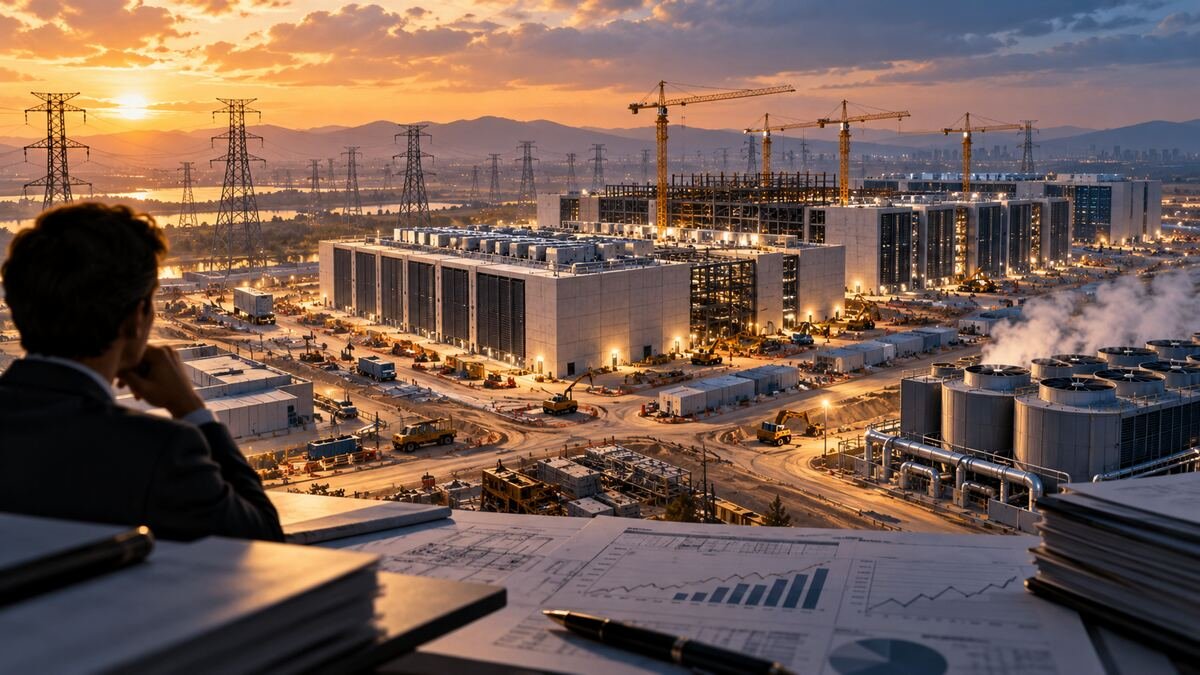
The enormous investment plans behind artificial intelligence are meeting the difficult realities of infrastructure. A Financial Times report on October 18 describes strains in the US data center build-out, including project delays, debt exposure, investor uncertainty and community opposition. The headline figure—roughly $10 trillion in planned US AI infrastructure spending across the coming years—is a forecasted scale of investment, not money already spent or a guaranteed bill.
Why the build-out became so large
Generative AI requires computing capacity to train and serve models. Cloud providers and AI labs are racing to secure specialized chips, servers, buildings, power and cooling. The facilities take time to plan and require large upfront commitments. Companies often make long-term agreements before all equipment is installed, while investors try to estimate how quickly paid demand will grow.
This creates a timing mismatch. Capital can flow into projects early, but a site may not generate revenue until permits, construction, grid connections and network equipment are ready. If any piece slips, financing costs continue while customers wait. A project may also need new equity or revised debt arrangements if costs or schedules change. The Financial Times report describes these pressures as questions arise about how quickly new capacity can be built and used.
Three pressure points to watch
Power and grid access: Data centers need reliable electricity at scale. Utilities and local governments must coordinate connections and infrastructure, and some projects face long timelines. Microsoft’s reported exit from an Nscale project in Essex is a recent example of power availability shaping data center schedules, though that specific UK story is separate from the US figures.
Financing and demand: AI companies are signing large capacity agreements while the market tries to measure actual customer usage and revenue. High capital expenditure can make sense if usage grows quickly, but it increases exposure when projects are delayed or returns arrive later than planned.
Community acceptance: Residents may raise concerns about land use, electricity bills, noise, water and how much local benefit a project brings. According to the FT’s reporting, communities across the US are seeking moratoria or other restrictions. Local approval is a core part of project feasibility.
What this does not mean
Infrastructure constraints do not prove that AI demand is disappearing or that every data center investment will fail. The market includes companies with different balance sheets, contracts and project schedules. Some sites may progress while others are redesigned or delayed. A headline estimate for investment should not be interpreted as a confirmed public expenditure forecast without examining its assumptions.
What businesses should do
Companies planning AI services should ask providers about live capacity, geographic redundancy and contingency plans. For critical workloads, avoid depending on a single future facility or a promised expansion date. Test how costs change at different usage levels, and consider whether smaller models or more efficient inference can meet the same need. For developers, efficient software can reduce resource consumption; for buyers, evaluating actual business value helps separate useful adoption from speculative growth.
The coming years will test whether revenue and productivity gains can justify the physical investment required. The most durable AI infrastructure strategy will align demand, power, financing and community planning. Related coverage: Microsoft and the UK data-center power constraint and SoftBank’s workplace AI and robotics investment thesis.
Source: Financial Times, October 18, 2026. Figures and assessments are attributed to the FT report; planned investment should not be confused with completed spending.



Reader Discussions
No comments posted yet. Be the first to start the discussion!
Leave a Reply